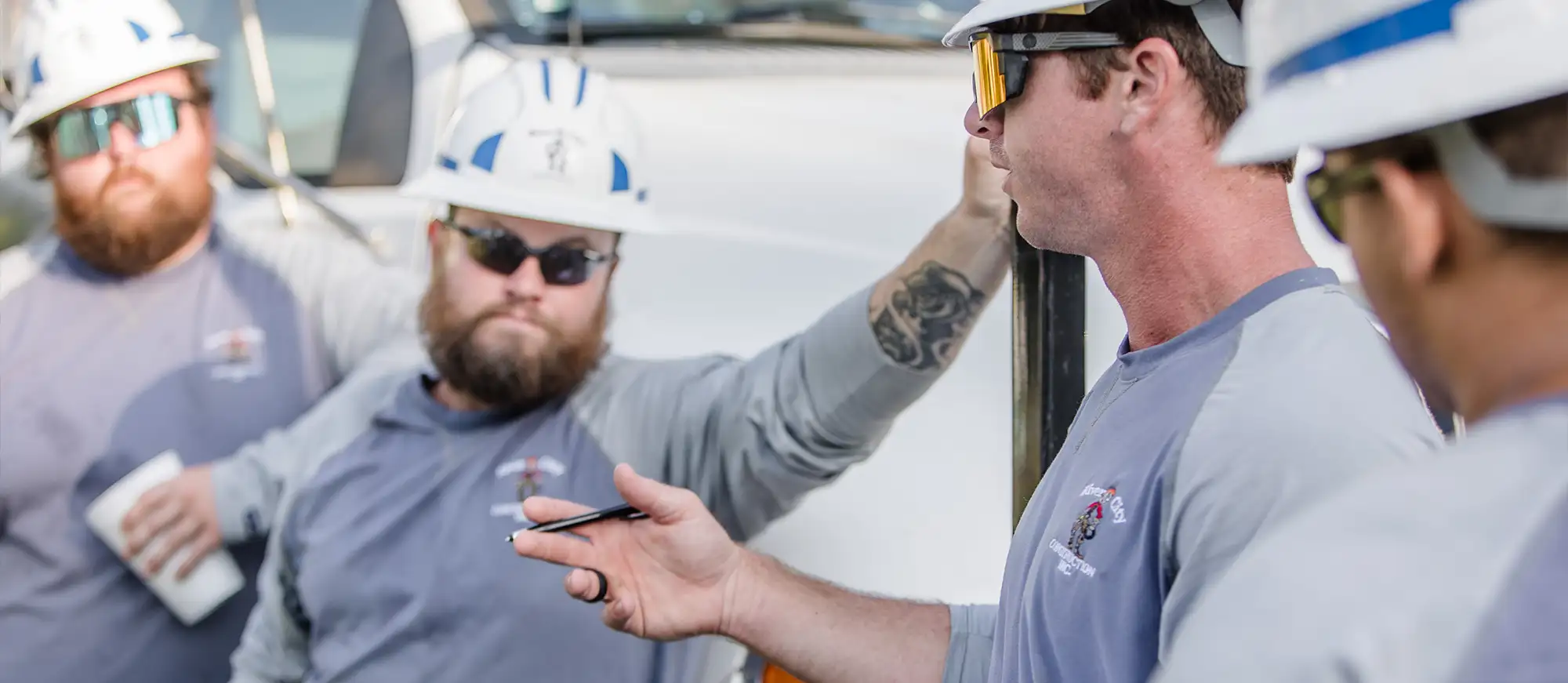
When severe weather affects the grid, conditions can shift by the minute. Crews may face shifting assignments, unfamiliar work areas, evolving hazards, damaged infrastructure, and changing restoration priorities.
This National Preparedness Month, River City Construction is highlighting an essential part of storm readiness that can make a difference throughout a response: clear, consistent communication.
Preparing crews to stay connected before, during, and after deployment helps teams remain coordinated, understand current conditions, and work safely as restoration efforts evolve.
Communication Starts Before the Storm
Effective storm communication begins well before crews arrive in an impacted area.
Before work starts, employees should understand their assignments, responsibilities, reporting structure, work locations, and known hazards. Crews should also know how information will be shared and where to turn when conditions or assignments change.
Storm restoration is a dynamic environment. A previously accessible work area may become difficult to reach. New hazards may emerge. Assignments may shift as utilities assess damage and set restoration priorities.
Communication must adapt to these conditions.
Timely updates from the field help supervisors and other team members maintain a clear picture of the response and make informed decisions about the work ahead.
Equally important, communication should be two-way. Field crews need timely updates from leadership, while leadership needs accurate information from the field.
Make Sure the Message Is Understood
Sending an update does not necessarily mean the message was received or understood.
During storm response, employees are working long hours in unfamiliar and rapidly changing environments typically in very hot or cold weather conditions. Important information can be missed or misunderstood. For safety-critical information, crews should confirm that assignments, hazards, changes, and expectations are understood.
Before moving to the next task, pause to confirm that everyone understands the change. A simple question, such as, “Does everyone understand what changed and what we need to do next?” can prevent confusion and help the crew move forward safely.
Speak Up When Something Changes
Every employee plays a role in maintaining situational awareness. If you identify a new hazard, notice changing conditions, have questions about an assignment, or believe something is unsafe, speak up immediately.
That communication may provide information that another crew, supervisor, or team does not yet have. A strong storm response depends on people being willing to share what they see, ask questions, clarify expectations, and raise concerns when something does not look right.
During storm work:
- Confirm assignments and responsibilities before work begins.
- Communicate any new or changing hazards.
- Share updates when work locations, access, or plans change.
- Maintain communication among crews, supervisors, and other teams.
- Confirm that important updates are understood.
- Speak up immediately if you have a safety concern.
At River City, preparedness means equipping our teams with the tools, information, and support they need before they are called to respond. When conditions change quickly, staying connected helps keep everyone moving safely toward the same goal: restoring critical infrastructure and supporting the communities that depend on it.